
So, you’re drawn to the clean lines of baccarat. The quiet tension. The fact it feels less like a chaotic carnival and more like a calculated duel between you and the odds. You’re not a high roller, but you appreciate numbers. You sense there’s a logic beneath the ritual. You’re right.
Here’s the deal: baccarat is often sold as a pure game of chance, no strategy needed. And for most, that’s fine. But if your brain lights up at the thought of house edges and probability distributions, well, you can play a smarter game. Not a winning game—the house always has its bite—but a more informed, controlled, and mathematically coherent one. Let’s dive in.
The Unshakable Foundation: Know Your Odds Cold
Before any “strategy” talk, you must internalize the raw math. It’s non-negotiable. Think of it as learning the physics of a pendulum before you try to build a clock.
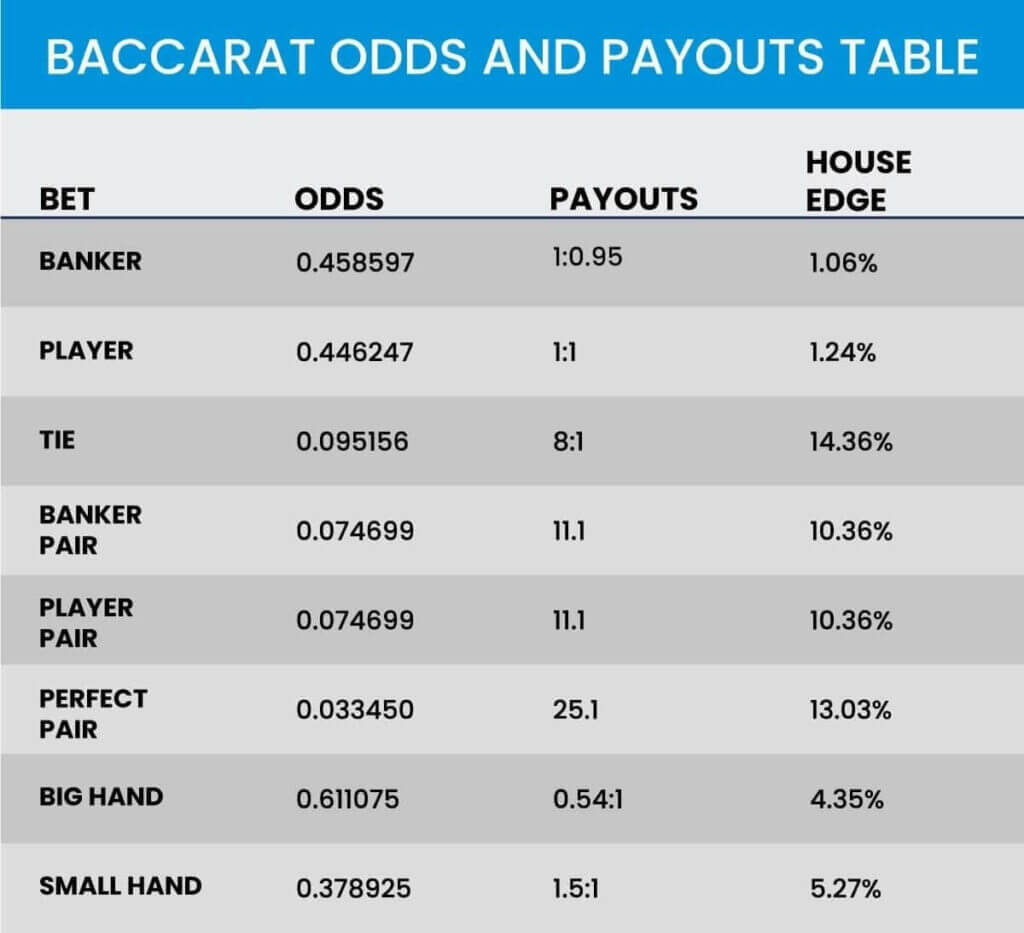
| Bet Type | House Edge | Probability of Win (approx.) |
| Banker | 1.06% | 45.86% |
| Player | 1.24% | 44.62% |
| Tie | 14.36% | 9.52% |
See that? The Banker bet is mathematically superior, full stop. That 5% commission on Banker wins is what keeps the game profitable for the house, but it’s still the best bet on the table. The Tie bet? A statistical siren song. That massive 14.36% house edge is a canyon. For the mathematically-inclined, it’s simply off the menu. Forever.
Why Card Counting Isn’t Your Holy Grail (And What Is)
You’ve heard of blackjack card counting. Baccarat has card counting systems too—Edge Sorting, tracking asymmetries. Honestly? They’re complex, offer tiny advantages, and are often flagged immediately in modern casinos. For the casual player, it’s a rabbit hole.
Your power lies in capital preservation and expectation management. Your strategy isn’t about predicting the next hand with certainty. It’s about structuring your play to minimize the house edge’s erosive effect on your bankroll. That’s the real game.
A Framework for the Logical Player
Okay, so you bet Banker. Every time? Well, mostly. But let’s build a practical framework around that unassailable fact.
1. The Bankroll Algorithm: Your Personal Federal Reserve
Don’t just bring “some money.” Calculate your session bankroll as a non-negotiable unit. A common, sensible approach is to have at least 50 betting units for a session. If your unit is $20, you bring $1000. This isn’t just a budget—it’s a buffer against variance, the short-term swings that can freak out even the most logical mind.
2. The Flat Betting Imperative
Chasing losses with escalating bets (the Martingale system) is the classic trap. It feels mathematical—double to recover!—but it’s a probability nightmare. One long streak can obliterate you.
Instead, flat bet. Consistently wager the same unit on Banker. Why? It ensures your exposure is linear and predictable. The house edge works as a slow, predictable drip, not a sudden flood. You’re playing the long-run statistic, not the emotional short game.
3. The “Trends” Are Noise. But Your Records Are Data.
Baccarat boards showing “Big Road,” “Bead Road”—they’re fascinating patterns, right? Our brains are wired to see them. But each hand is independent. The probability of Banker winning the next hand is still ~45.86%, regardless of the last ten outcomes.
That said, track your own play. Note sessions, wins/losses, duration. This personal data set is far more valuable than any mythical pattern on the board. It shows you your own variance, your own stamina. It turns anecdote into personal insight.
Advanced Considerations for the Curious Mind
Once you’ve mastered the core framework, your mathematical brain might itch for more. Here are some nuanced edges.
- Table Selection: Seek out commissions lower than 5% if you can find them. Some casinos offer 4% or even 3% on certain tables. That tiny shift directly improves your expected value on every Banker win.
- The “When to Bet Player” Paradox: Statistically, Banker is always better. But… if you’re tracking and notice an absurdly long Banker streak, the probability doesn’t change, but the variance might be due for a correction. Some math-minded players will place a single, minimal “courtesy bet” on Player after 7-8 consecutive Bankers, almost as a variance hedge. It’s not statistically optimal for the single hand, but it can be a psychological trick to stay engaged. Use sparingly, if at all.
- Quit Points: Set a win goal and a loss limit as percentages of your bankroll. Hitting +30%? Walk. Hitting -40%? Definitely walk. This imposes a mathematical structure on the session, preventing the “just one more hand” decay that erodes all logic.
The Ultimate Mindset Hack
Your greatest tool isn’t a betting system. It’s reconceptualizing success. For the mathematically-inclined casual player, a “successful” session isn’t defined by finishing in the black. It’s defined by executing your plan perfectly: flat-betting Banker, managing your unit size, sticking to quit points, and enjoying the elegant flow of the game without succumbing to statistical fallacies.
You’re not beating the house edge. You’re understanding it so intimately that you can sit across from it, acknowledge its presence, and still have a disciplined, engaging experience. You’re playing the game within the game.
In the end, baccarat for you is less about luck and more about integrity—the integrity of your own system against the relentless, beautiful grind of probability. That’s a fascinating way to spend an evening, don’t you think?