
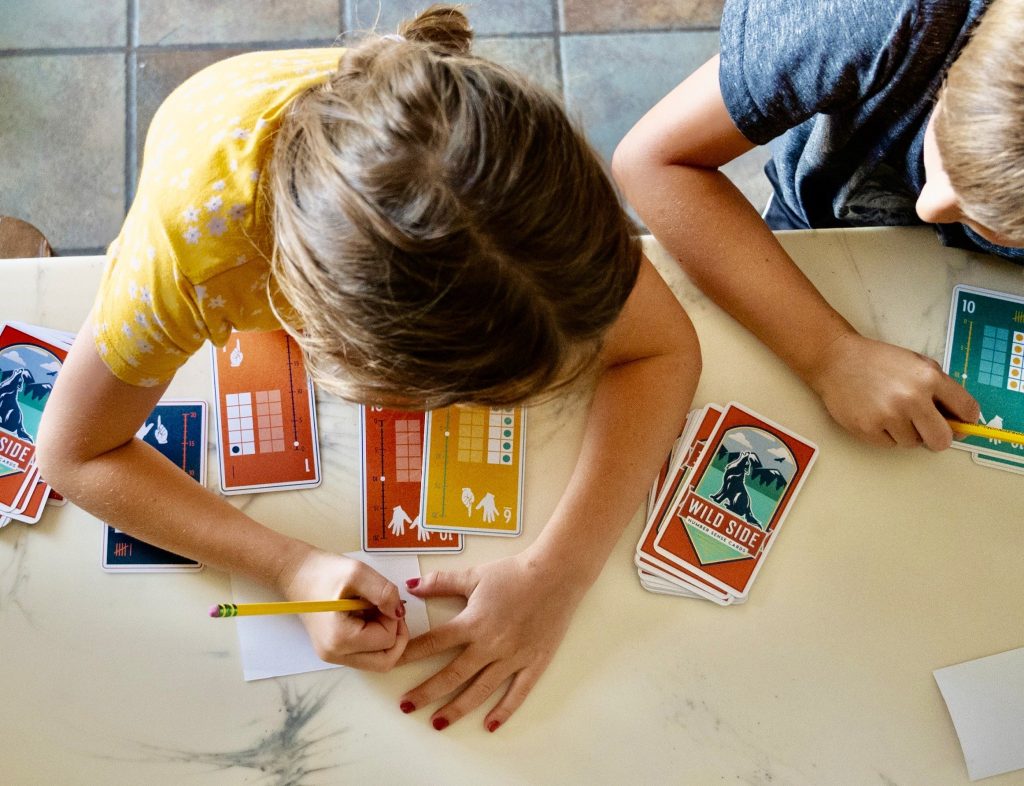
Let’s be honest. Getting kids excited about numbers and patterns can sometimes feel like, well, pulling teeth. Worksheets have their place, sure. But what if the secret to unlocking a child’s logical thinking was hiding in a deck of cards all along?
I’m talking about rummy. Not the high-stakes adult game, of course, but its beautiful, foundational concepts. The classic card game is a stealthy powerhouse for early math and logic education. It turns abstract ideas into something tangible, strategic, and—dare we say it—fun.
Why Rummy? It’s More Than Just a Game
Think of a child’s brain as a busy construction site. Rummy doesn’t just deliver raw materials (numbers). It provides the blueprints for how to assemble them. The game’s core mechanics—forming sequences (runs) and sets (groups)—are pure, applied logic. Kids aren’t memorizing; they’re problem-solving in real-time.
And here’s the deal: in a world where screen time dominates, the tactile feel of cards, the social interaction, and the immediate feedback of a game create a rich, multi-sensory learning environment. It addresses a modern pain point: making foundational learning engaging without a digital interface.
Core Rummy Concepts as Learning Tools
1. Sequencing & Number Order
Building a run like 5, 6, 7 of hearts is a hands-on lesson in ordinality. It’s not just knowing that 6 comes after 5; it’s physically searching for it, understanding ascending and descending order, and seeing the gap if a card is missing. This is number sense in action.
You can start simple. “Can you make a line of numbers from 4 to 8?” Suddenly, it’s a treasure hunt, not a drill.
2. Sorting, Grouping, and Classification
To form sets, a child must sort cards by number or face value, ignoring the suit. This is foundational logical reasoning and set theory. They learn that a ‘7’ of diamonds and a ‘7’ of clubs belong together based on one property (rank), while a sequence of hearts belongs together based on another (suit and order).
It’s like organizing toys—but with rules that flex the brain. Do you group by color? Or by type? Rummy teaches that classification depends on your goal.
3. Probability and Strategic Decision-Making
This is where it gets juicy for young minds. As they hold their cards, they start asking implicit questions: “What card do I need? How many of them could be left in the deck?” They learn to weigh risks. Do I pick up the unknown card from the deck, or the known one from the discard pile?
This isn’t advanced math, not yet. It’s the seed of computational thinking and predictive analysis. They’re building a model in their head, however simple. “I have two eights, so maybe I should collect a third…” That’s hypothesis testing, folks.
Practical Activities to Get Started
Don’t jump straight into a full game. Scaffold the skills. Here’s a progression that works:
- Number Match Hunt: Spread cards face up. Ask your child to find all the 4s, then all the Queens. Simple grouping.
- Sequence Builders: Give them 5, 6, and 8 of a suit. Ask what’s missing. Make it a physical gap they can fill.
- “Go Fish” Modified: Play classic Go Fish. It’s essentially rummy’s set-building phase in a simpler, asking-based format.
- Open-Hand Rummy: Play with all cards visible. Discuss choices together. “I see you need a 9. Should you pick from here or here?” This models strategic thinking aloud.
Key Skills Developed (The Takeaway)
| Rummy Action | Math/Logic Skill | Real-World Analog |
| Forming sequences | Number order, patterning | Following steps in a recipe |
| Creating sets/groups | Classification, set theory basics | Organizing a bookshelf |
| Deciding to draw/discard | Probability, risk assessment | Choosing a line at the grocery store |
| Planning a winning hand | Strategic planning, working memory | Planning a project with multiple steps |
| Tracking discarded cards | Observation, deduction | Solving a mystery based on clues |
See? It’s all connected. The game builds a foundation for logical reasoning that extends far beyond the card table.
A Word on Mindset and Play
Honestly, the biggest mistake is turning it into a lesson. The goal is play. Let them win sometimes by figuring it out. Let them make a “wrong” move and see what happens—that’s where the deepest learning often occurs. The frustration of almost having a sequence is what makes finally completing it so satisfying.
And you know, it’s okay to bend the rules for early learners. Maybe suits don’t matter for sequences at first. Maybe you only use cards 1-10. Adapt. The core idea is to engage those cognitive muscles through joy and challenge, not pressure.
In fact, that’s the real magic. You’re not just teaching math. You’re modeling patience, turn-taking, and graceful losing. You’re having a conversation that isn’t about screens. You’re building memory—not just of numbers, but of time spent together, laughing and thinking.
So, next time you’re pondering how to make early childhood math education more engaging, don’t overlook the humble deck of cards. Shuffle it, deal a few hands, and watch as your child starts to see the patterns in the world—one sequence, one logical choice, at a time. The fundamentals were there all along, waiting to be played.